- Published on
Morpho 101: Adaptive Interest Rates for Balanced Markets

Introduction
Over the past few days I noticed confusion around Morpho markets showing high interest rates. Some markets spiking to 22%, others to 67%, and even higher. Take this mHYPER/USDC market showing rates at 67.10%:
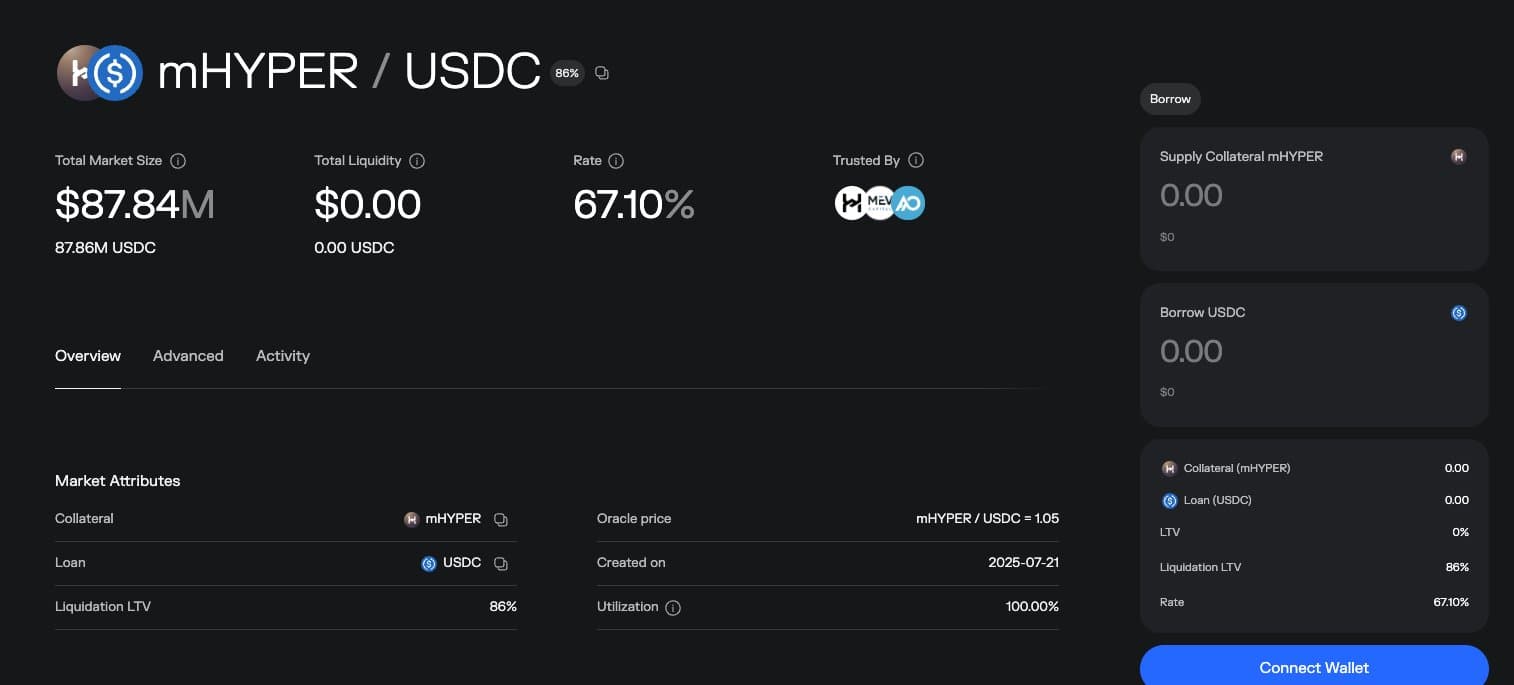
At first glance, these numbers look concerning. But after spending time understanding how Morpho's AdaptiveCurveIRM works, I realized these aren't warning signs. They're the system functioning exactly as designed.
The 90% Target & Adaptive Rates
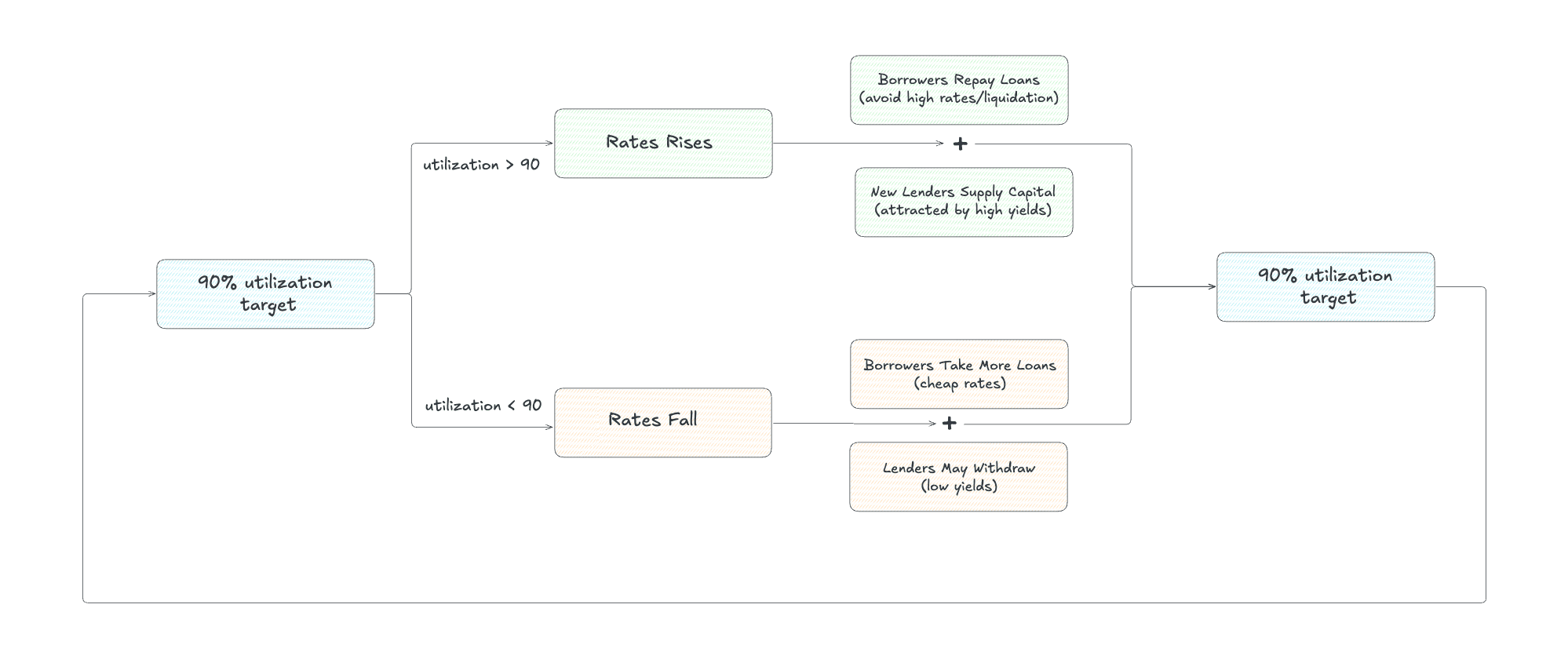
Morpho's AdaptiveCurveIRM has one job: push every market toward 90% utilization. This is the equilibrium point where lenders maximize their capital efficiency while maintaining a 10% liquidity buffer for withdrawals.
The system calculates how far current utilization is from the 90% target. When utilization is above 90%, rates climb exponentially. When it's below 90%, rates drop exponentially. The further from target, the faster the adjustment.
Here's the feedback loop. High utilization triggers rising rates. Rising rates incentivize borrowers to repay and attract new lenders. Supply increases, utilization drops back toward 90%. The opposite happens when utilization is low. Falling rates encourage more borrowing, pushing utilization back up.
Aftermath
Let's look at that mHYPER/USD market a few days later. On November 4th it showed rates at 67.10% with critically low liquidity. Here's the same market on November 11th:
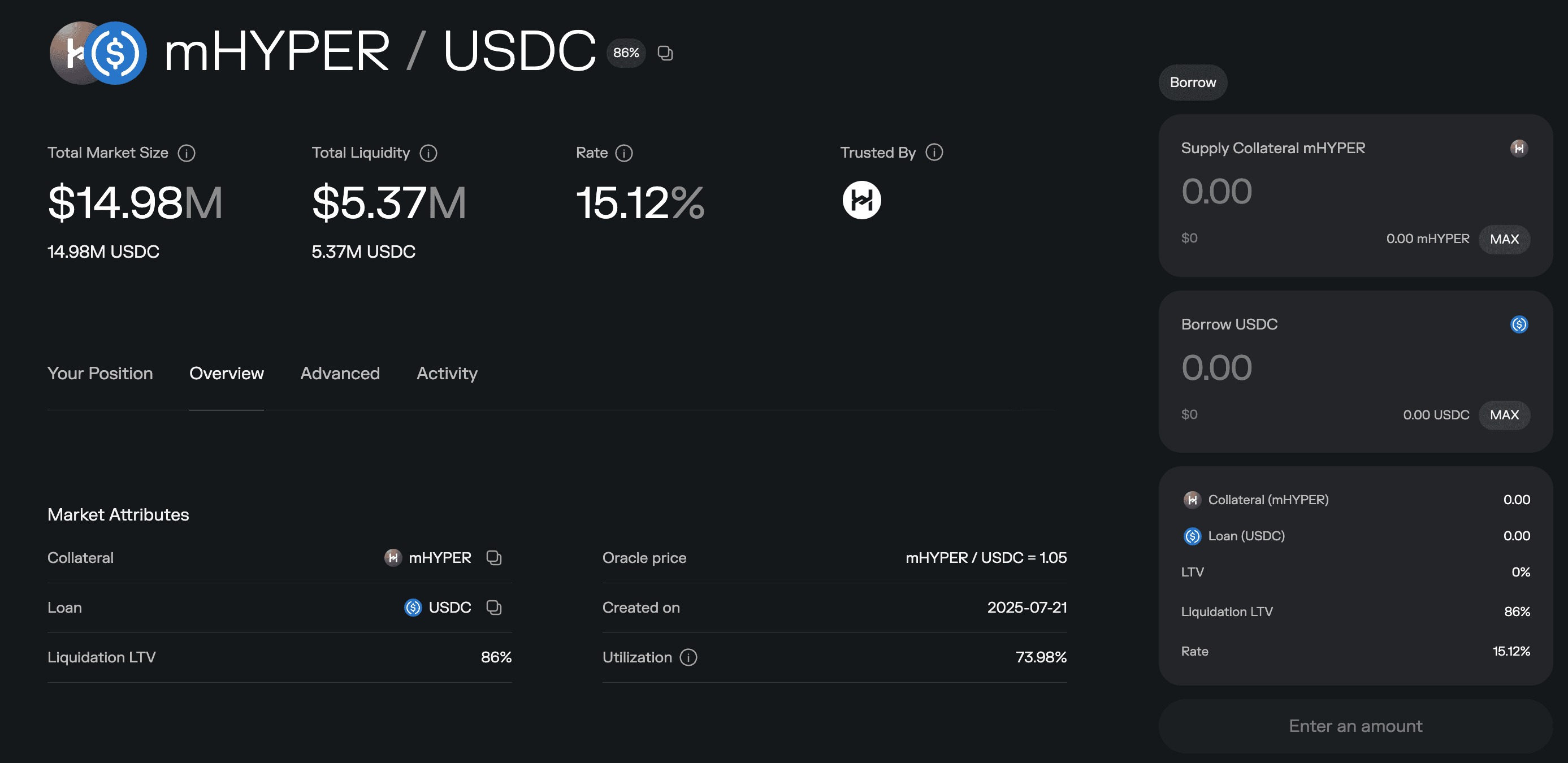
Total supplied: 14.98M USDC
Available liquidity: 5.37M USDC
Total borrowed: 9.61M USDC
Current utilization: 64%
Current rate: 15.12%
In one week, rates dropped from 67% to 15%. Utilization fell from 98%+ down to 64%. The feedback loop worked. Those extreme rates incentivized borrowers to repay and attracted new lenders. The market rebalanced itself.
Notice utilization is now at 64%, well below the 90% target. If it stays here, rates will continue declining exponentially until equilibrium is reached. No governance intervention needed. No emergency measures. The algorithm handles it.
This is why those initial high rates weren't broken. They were working exactly as designed.
Conclusion
The adaptive curve is algorithmic supply and demand for DeFi lending. High rates signal scarcity, low rates signal abundance. The market responds accordingly.
Those 67% rates weren't broken. They were the price signal that rebalanced the market. Within a week, utilization dropped from 98% to 64%, and rates fell from 67% to 15%.
When you see extreme rates on Morpho, you're watching the system work, not break. Though the adaptive curve handles utilization perfectly, it operates within the constraints of the oracles and collateral mechanisms around it. But that's a topic for another post.